Showing posts with label education. Show all posts

Thursday, March 3, 2011

Helen Keller and Anne Sullivan

On March 3, 1887, Helen Keller and Anne Sullivan met for the first time. Helen was 6 years old and Anne was 20.

Helen Keller was born in 1880 to a Confederate Civil War veteran and his wife in Alabama. When she was 19 months old, she contracted an illness which left her deaf and blind. Her parents, who wanted her to have as normal a life as possible, contacted Alexander Graham Bell, who was an authority on deafness. Bell also invented the telephone. Bell told the family about the Perkins School for the Blind, near Boston. In turn, the school recommended Anne Sullivan as a teacher for Helen.

Anne Sullivan was born in 1866 in Massachusetts, and was a student at the Perkins School. Because she has a severe visual impairment herself, she had some understanding of Helen's feelings of isolation and frustration.

Anne tried to teach Helen by using her finger to spell out words in the palm of her student's hand. Helen did not understand what her teacher was doing, and resisted, sometimes violently. A breakthrough came one day when Anne held Helen's hand under running water, and spelled out the word "water" in her other hand. At last, Helen understood! From that day forward, she wanted Anne to teach her everything she could.

Helen's love of learning flourished she was able to complete high school and go on to Radcliffe College in Cambridge, MA. She was the first deaf-blind person to receive a Bachelor's degree. She graduated from college with honors in 1904.

Helen and Anne became inseparable. Anne accompanied Helen to college and continued to help her to communicate and study. This only ended when Anne died in 1935.

Helen became an author and a public speaker. She published her first book, an autobiography called "The Story of My Life," in 1902. She was a strong advocate for the deaf, the blind, and racial equality.

Helen Keller died at her home in Connecticut in 1968 at the age of 87.

Wednesday, August 18, 2010


Distance Learning Instructor Matt Manfred reminded me that the world would be a much bleaker place without The Peanuts Gang and Ben & Jerry's Ice Cream!


Did you know that Charles Schulz, Ben Cohen and Jerry Greenfield were distance learners? It's true!


Charles Schulz learned do draw by taking correspondence courses with Art Instruction Schools. He even became a teacher there after he returned from World War II!


Ben Cohen and Jerry Greenfield took a correspondence course in ice cream making from Penn State, and the rest is ice cream history!
Thanks for the reminder, Matt!

Social Studies Tip of the Week


The Great Depression began in 1929 with the Stock Market Crash, and lasted throughout the 1930s, ending with the beginning of World War II. During the Depression, the United States economy fell so sharply that unemployment reached 25%, and the Gross National Product dropped by 33%. This means that companies did not have money to pay their workers; one out of every four people lost their jobs, and had no money to buy things that were still being produced. Because of this, American factories produced fewer things that we could trade with other countries. The slowdown in trade cause the depression to spread around the world.


If the economic situation wasn't bad enough, there was a drought in the midwest, where most of our food crops are grown. It was so dry that, when heavy winds came along, there were massive dust storms that covered the fields, cars and even houses, like snow. The area, especially Oklahoma and nothern Texas, became known as the Dust Bowl. The drought meant that fewer crops could be produced, which meant less food.

The shortage of food meant that food was more expensive, and people couldn't afford to buy it. Many Dust Bowl farmers packed their families up and headed to California to look for work. They became migrant workers, continuously, following whatever crops were in season.

If you would like to read some novels that are set during the Great Depression, I encourage you to read The Grapes of Wrath and Of Mice and Men by John Steinbeck.


Tuesday, August 17, 2010

Writing Tip of the Week - Subject-Verb Agreement


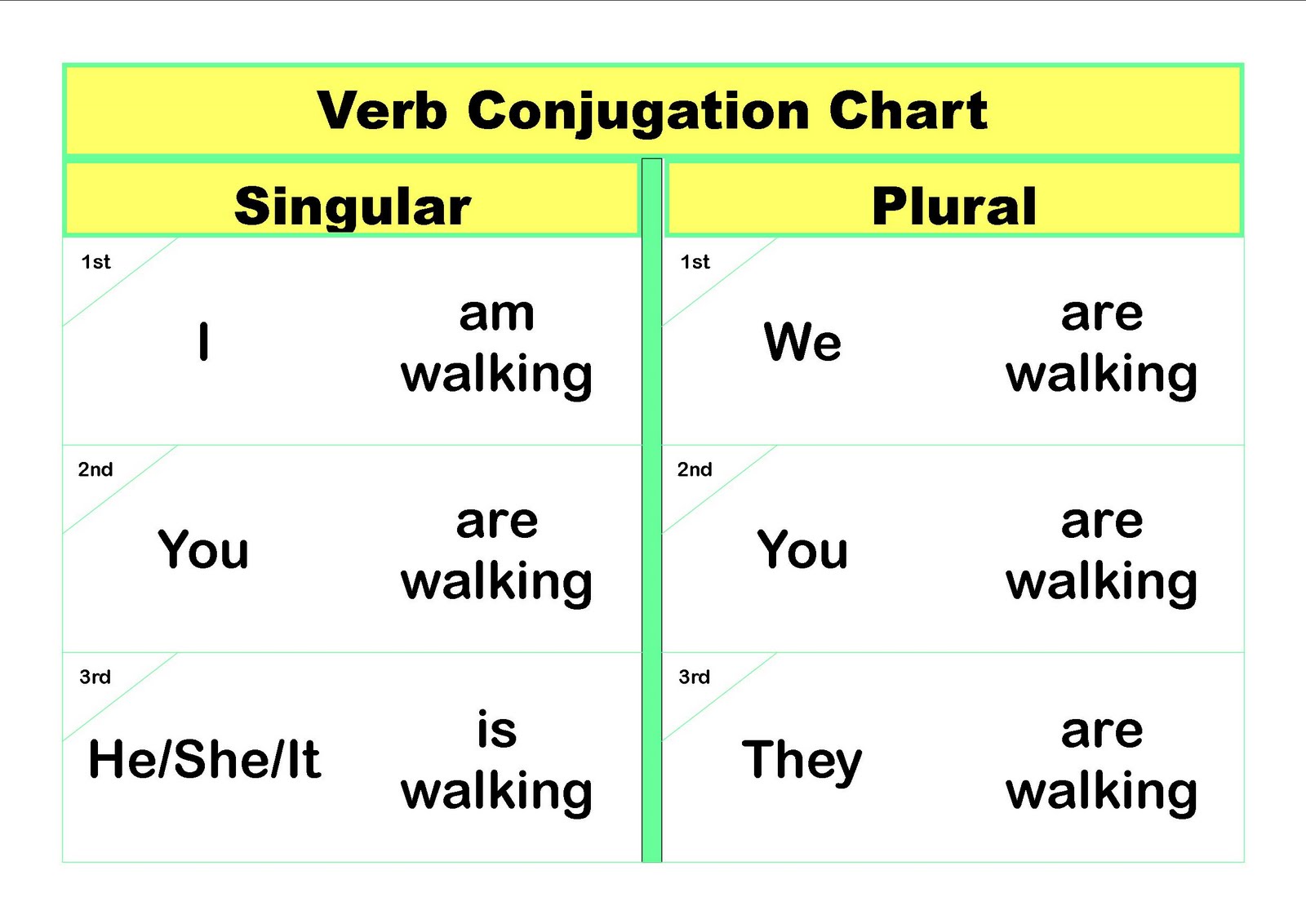
If you have a hard time remembering how to make your subjects and verbs get along with each other, this chart might be useful.


There are 6 types of subjects. Let's look at them.


The left column on the chart shows the singular subects and the column on the right shows the plural subjects.


The rows show first person, second person and third person points-of-view.


Every subject has two parts: point-of-view and singular/plural. For example, the word "I" is first person singular, while the word "they" is third person plural.


Let's take a closer look at the word "you." It's both singular and plural. For example, if I'm talking to one friend, I might say, "You are my friend." If I'm talking to two or more friends, I would still say, "You are my friends."


There are many slang ways to differentiate between the singular and plural "you." In the South, they say "you all" or "y'all." In New York, they say "yous." We Pennsylvanians usually say "you'uns or "y'uns," depending on which said of the state you live! Those are all forms of slang. You should avoid slang when writing, and use "you" whether your subject is singular or plural.

I've conjugated the regular verb "walk" on this chart so that you can see the different forms. Note how they change depending on the subject.


On this chart, I've conjugated the irregular verb "to be." Part of what makes this verb irregular none of the present tense (happening right now) forms of the verb is "be." Again, note how the verb changes with the subject.


And on this chart, I've combined the two verbs to create the infinitive verb "to be walking," so you can see how the verb changes again. The infinitive form just means "a state of being," and usually involves the verb "to be" in one of it's many forms.

Thursday, August 12, 2010

Science Tip of the Week


There is more water on Earth than there is land. About 70% of our planet's surface is covered by oceans. The Pacific Ocean alone covers about 30% of the planet.

Social Studies Tip of the Week

Because the DLP staff was out of the office yesterday, your Social Studies Tip of the Week is a little late!

We are very lucky to live in Pennsylvania. Our state is rich with American history!
If you've never visited Gettysburg, I encourage you to check it out!

The Battle of Gettysburg took place from July 1-3, 1863. It was the turning point of the American Civil War, in which Union Major General George Meade's Army of the Potomac defeated Confederate General Robert E. Lee's Army of Northern Virginia. More American lives were lost at Gettysburg than during any other Civil War battle.

Gettysburg is located about 40 miles south of Harrisburg, near the Maryland border. There are many ways to see the battlefield. You may take a guided tour, or just explore on your own. There are bus tours available, but you may also drive around the battlefield. You may also choose to see it by bicycle or on horseback. For information about Gettysburg, go to http://www.gettysburg.com/.

Tuesday, August 10, 2010

Writing Tip of the Week


Did you know that commas can save lives? There is a world of difference between these two sentences:

1. Let's eat, Grandpa!

The comma in the first sentence indicates that you are speaking to Grandpa.


.


2. Let's eat Grandpa!

The lack of a comma in the second sentence indicates that Grandpa is the direct object and the eating will be done to Grandpa.

This Week's Online Classroom Sessions

Fecha: Agosto 6, 13 y 20 (viernes) a las 9 a.m.:Inglés para personas hablantes de otros idiomas (ESOL)
Instructor: Shannon Mischler
¿Tu idioma nativo no es el Inglés? ¿Quieres practicar tu Inglés: escuchar, hablar, leer y escribir? Entonces, únete a Inglés para personas hablantes de otros Idiomas (ESOL) disfruta de las clases online! Durante la clase online los estudiantes comparten noticias del mundo, leen artículos noticiosos, amplían su vocabulario y practican estructura gramatical y pronunciación. En la clase online se utiliza Skype para el audio. Por favor descargue Skype en http://www.skype.com/download/ y envíe su usuario de Skype al correo electrónico de Shannon smischler@tiu11.org. Para unirse a las clases online en vivo diríjase al link http://adobeconx.tiu11.org/smischler/ e ingrese a las 9 am. Si desea participar puede escribirle a Shannon Mischler al correo smischler@tiu11.org para comunicarle su intención.

en Inglés/In English:

Fridays August 13, 9:00am (and every Friday) – English for Speakers of Other Languages (ESOL)
Instructor: Shannon Mischler
Are you a non native English speaker? Would you like to practice your English listening, speaking, reading, and writing? Then join the English for Speakers of Other Languages (ESOL) live online class, every Friday at 9:00am! During the live online class students share world news, read news articles, expand their vocabulary, and practice grammatical structures and pronunciation. The live online class uses Skype for audio. Please download Skype at http://www.skype.com/download/ and email your Skype user name to Shannon at smischler@tiu11.org To join the live online class go to http://adobeconx.tiu11.org/smischler/ and login at 9 a.m. Please let Shannon Mischler know you will be participating in the live online class by emailing her at smischler@tiu11.org.

Monday, August 9, 2010

Reading Tip of the Week: Point of View


Point of view means who is telling the story. Who's point of view is it?

If the person telling the story is an actual character in the story and says "I did this" and "I said that," the story is told in first person. If that person also knows what all of the other characters are doing and thinking, the point of view is first person omnicient.If he only knows things because he saw them or because another character told him, the point of view is first person limited.

If the person telling the story is not an actual participant in the story and says "he did this" and "she said that," the story is told in third person point of view. If speaker, or narrator, knows what is happening with all of the other characters, the point of view is third person omnicient. If the narrator only follows one character, it is third person limited.

There is a second person point of view, but it is rarely used.

Friday, August 6, 2010

Math Tip of the Week -- Place Values

It can be hard to keep your place when you are working with large numbers. This chart illustrates how place values work. It shows what the number looks like and how we say it and write it out. If you write checks, this is a good thing to know! It also shows how the number breaks down into place values. Just click on the chart to get a closer look!


Monday, August 2, 2010

This Week's Online Classroom Sessions

Mon, August 2, 12:30 PM: Reading Scientific Images: Climate Change
Instructor: Rick Searle(rsearle@tiu11.org)
Online Classroom: http://adobeconx.tiu11.org/r64531678

Tuesday, August 3, 12:30 PM: Elements of Geometry
Instructor: Rick Searle (rsearle@tiu11.org)
Online Classroom: http://adobeconx.tiu11.org/r64531678

Thursday, August 5, 7:00 PM: Understanding Main Idea and Supporting Details
Instructor: Dyan Schauer (dschauer@tiu11.org)
Online Classroom: http://adobeconx.tiu11.org/dschauer